

Carried by 10 nurseries
View Availability at NurseryData provided by the participants of the Consortium of California Herbaria
View additional distribution information on the Jepson eflora
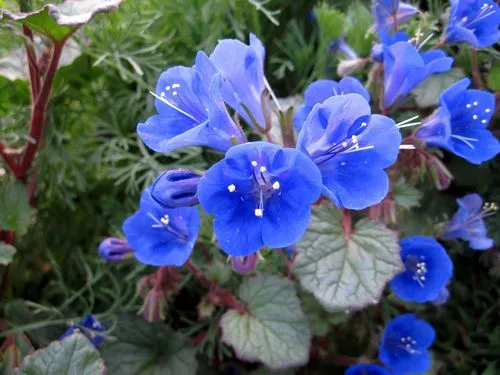
Desertbells (Phacelia campanularia) is an annual in the Waterleaf family (Hydrophyllaceae). Sometimes it is listed as California bluebells; always check the botanical name because there are many species of phacelia available. Desertbells leaves are light gray-green and oval. The bell-shaped flowers are deep blue with white stamens. It blooms from February through April in the desert, providing a much-needed early food source for pollinators. In cooler regions, it blooms from spring through early summer.
In the wild, it is endemic (limited) to the Mojave and Sonoran Deserts in California. As an easy-to-grow annual wildflower, however, it is commonly found in native wildflower seed mixes.
After the rainy season begins in autumn, scatter the seeds onto sandy or rocky soil. Good drainage and full sun is best. Desertbells are beautiful growing in a patch, or mixed with California poppies, golden blazing stars, or creamcups (Platystemon californicus). Allow the flowers to produce and drop seeds for more flowers next year.
Annual herb
1 - 2 ft Tall
1 - 2 ft Wide
Mounding
Fast
Evergreen
Slight

Blue, Purple
Winter, Spring
Full Sun
Low
Max 1x / month once established
Moderate
Tolerates cold to 0 - 10° F
Fast, Medium
Prefers sandy or decomposed granite soil.
Soil PH: 7 - 10
Easy to grow from seeds. Once established, it will self propagate.
Open, sandy or gravelly places
Creosote Bush Scrub, Joshua Tree Woodland
Creosote Bush (Larrea tridentata), Ocotillo (Fouquieria splendens ssp. splendens), Jojoba (Simmondsia chinensis), Blue Paloverde, White Bursage (Ambrosia dumosa), Chuparosa (Justicia californica), Barrel Cactus, Desert Lavender (Condea emoryi), Indigo Bush, Apricot Mallow (Sphaeralcea ambigua var. rugosa), Opuntia spp., numerous annual wildflowers
-
Likely
-
Confirmed
Angelic Sweat Bee
Agapostemon angelicus
Orange-bellied Sweat Bee
Agapostemon melliventris
Texas Striped Sweat Bee
Agapostemon texanus
Milbert's Tortoiseshell
Aglais milberti
Canola
Brassica napus
Apples
Malus domestica
Watercress
Nasturtium officinale
Daikon
Raphanus sativus