

You don't have to rip out your entire yard to get started with native plants. The professional design ideas on this page are great ways to introduce native plants to your landscape. We’ve included specific plant quantities and helpful tips with each gorgeous design. Make them your own, or let them inspire you!
Design ideas for beautiful native gardens
Think big, start small
Sunny pollinator patch
Areas with full sun are perfect for drought-adapted native flowering plants, which also serve as important sources of food and shelter for pollinators and birds.
Tips and tricks:
- Include a dense shrub like toyon, which provides cover and berries for birds.
- Up the quantity of flowers by sowing annuals like clarkia and phacelia. You can also start the seeds in pots and then transplant for more control.
- Consider including a bird bath to provide birds and other wildlife with water as well as food.
- Plant species that flower at different times of the year to provide a longer foraging period for pollinators.
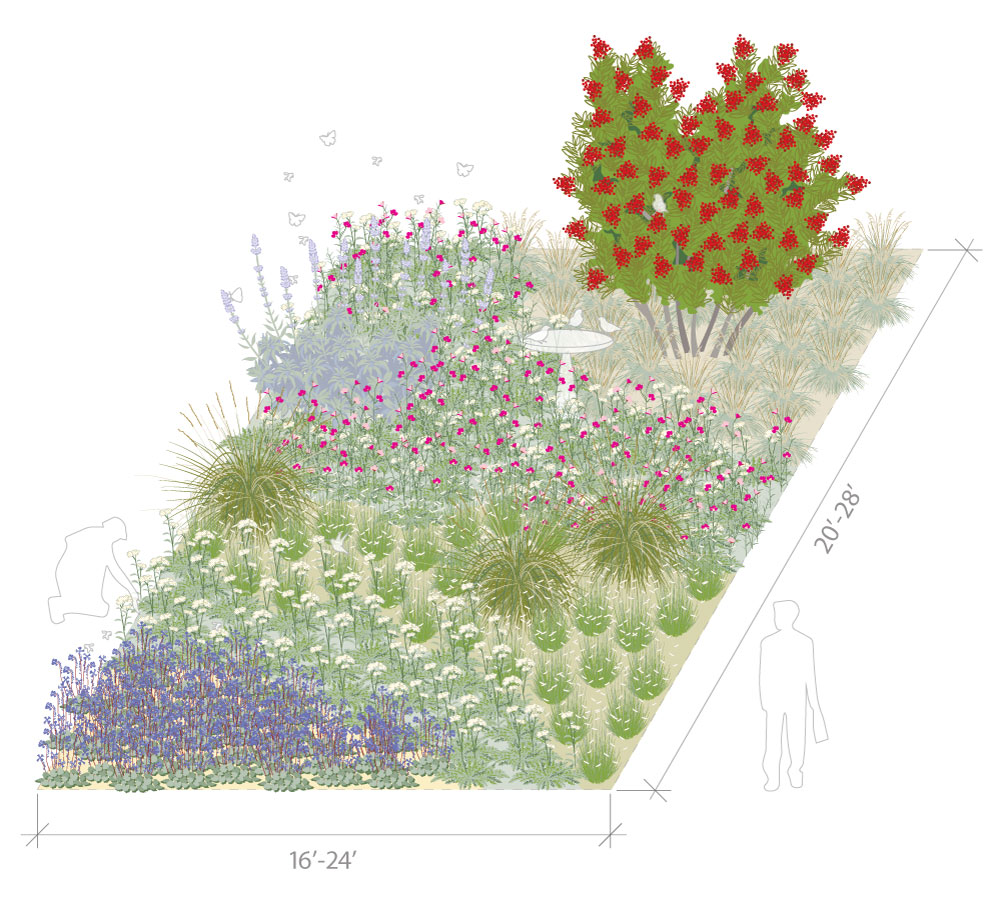
What you'll need
- Purple clarkia (seed)
- 1 White sage
- 1 Toyon
- 3 Deergrass
- 10-20 Desertbells
- 15-25 Blue grama
- 20-30 California fescue
- 30-60 Common yarrow
(75-125 total plants)
Shady tree canopy
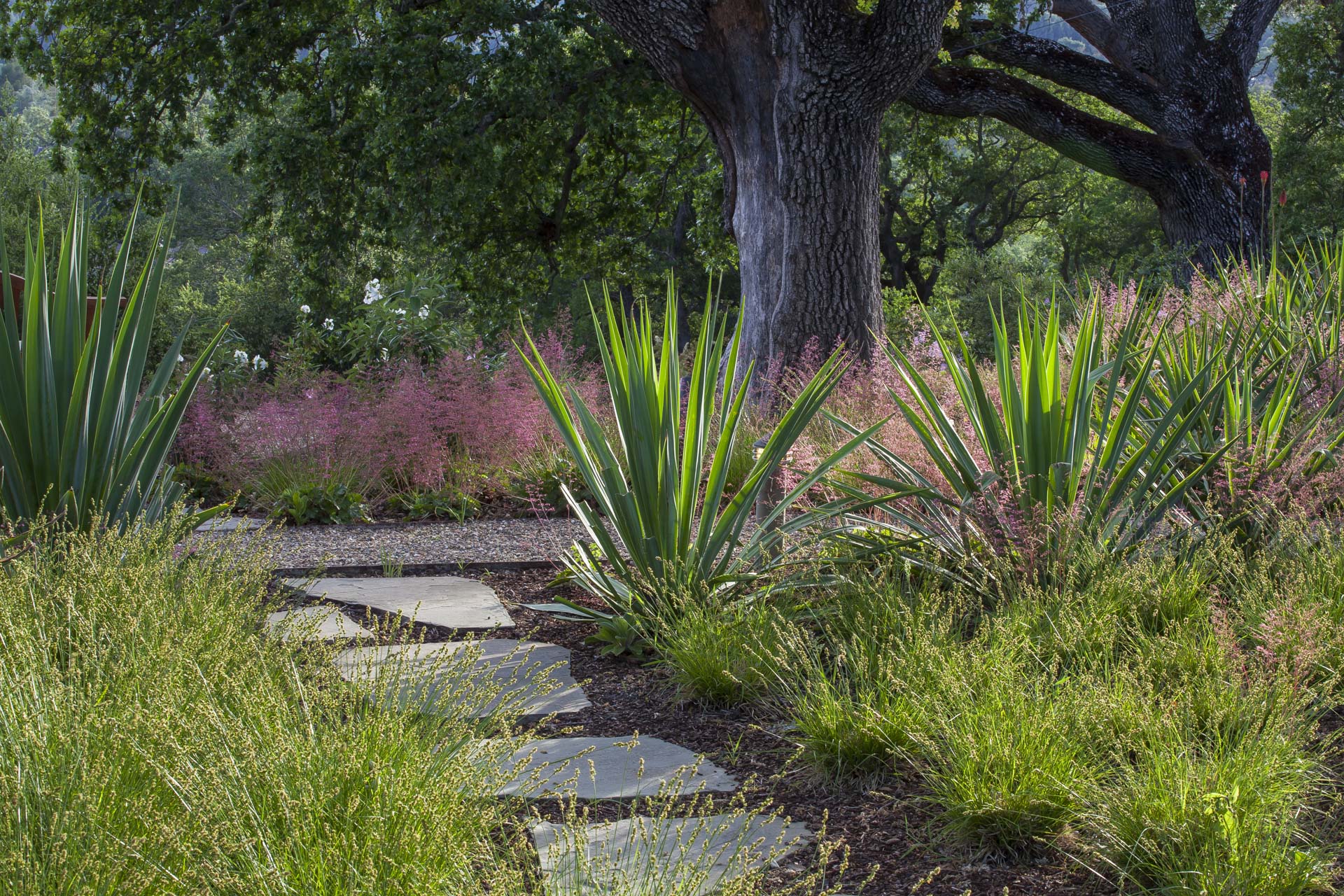
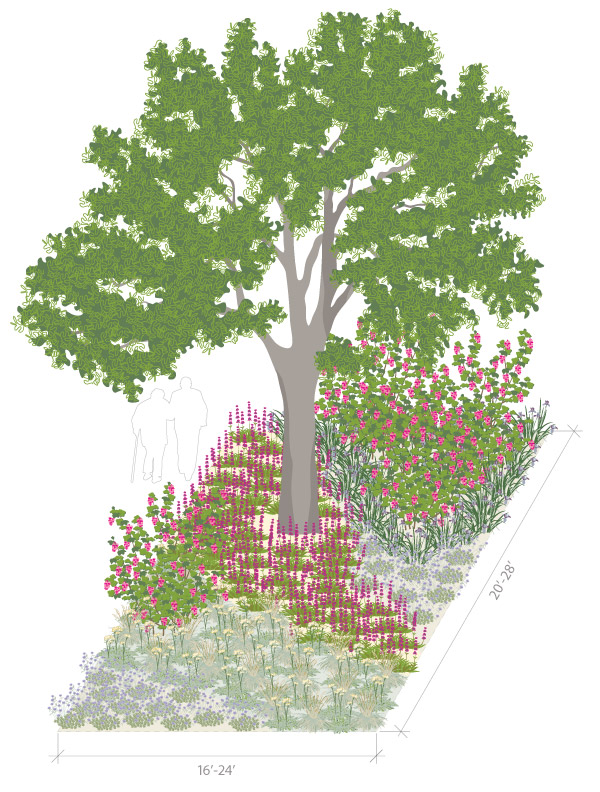
Planting in shade is all about choosing plants that are suited to low-light conditions. If you already have a large, shade tree, consider using this vignette as inspiration.
- Hummingbird sage thrives in dry shade.
- Masses of currant bring early spring color to the understory.
- Plants like California fescue and coyote mint can take part shade as well as full sun.
What you'll need
- 1 Valley oak
- 3-4 Red flowering currant
- 10-20 California fescue
- 15-25 Common yarrow
- 15-25 Douglas Iris
- 15-25 Hummingbird sage
- 15-25 Coyote mint
(75-125 total plants)
Pots and planters
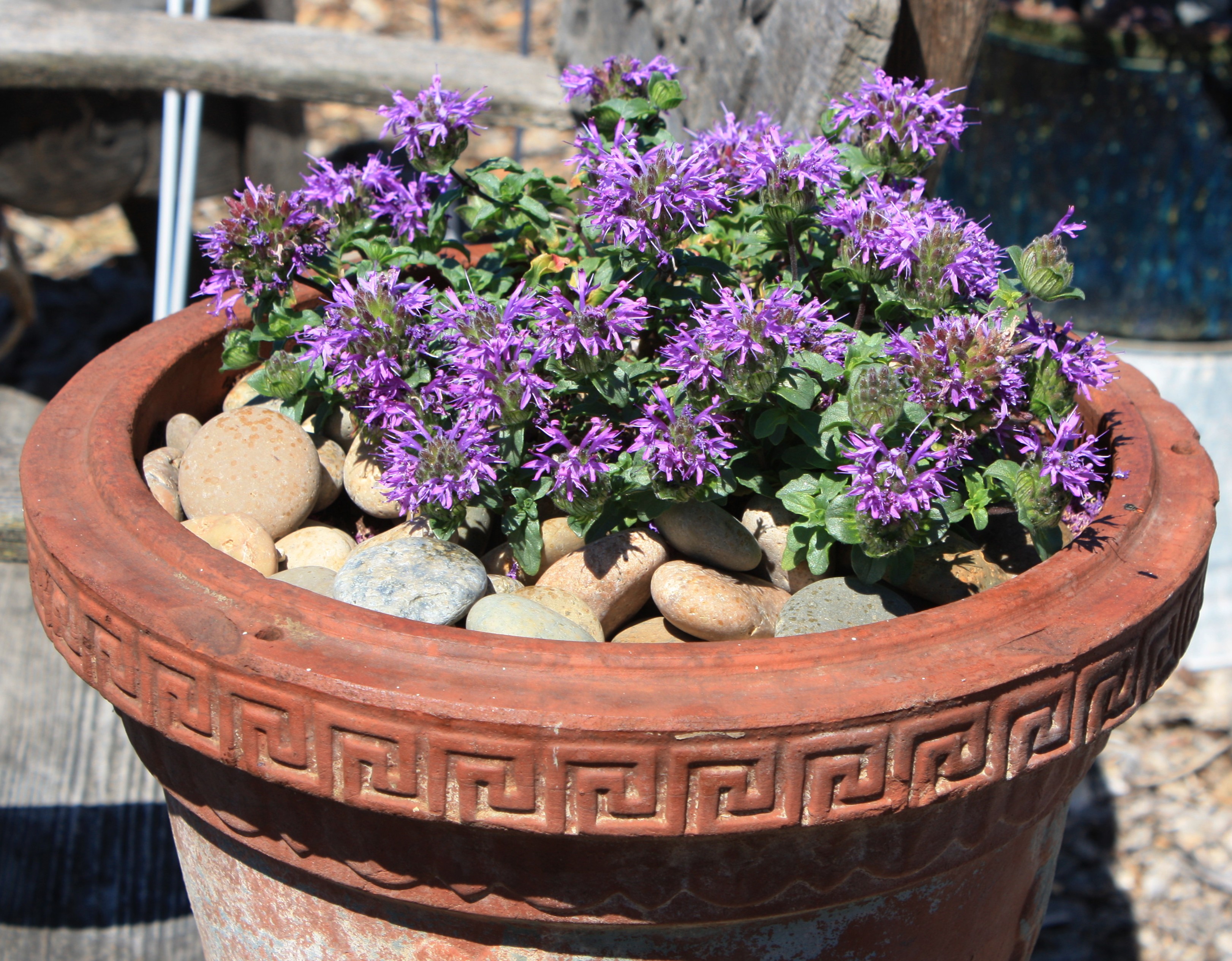
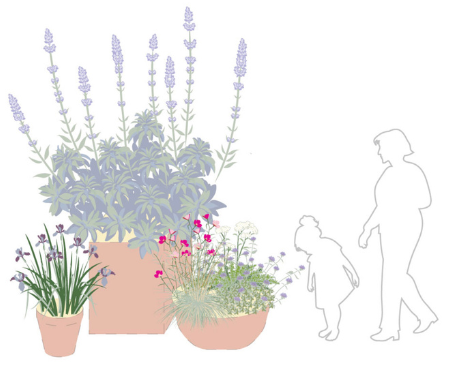
Create your own native plant oasis on your patio or balcony by using pots and planters. Search Calscape for more plants that have been recommended for containers by our horticulture volunteers.
To create this design
- 1 White sage
- 1-3 Purple clarkia
- 1-3 California fescue
- 1-3 Common yarrow
- 1-3 Douglas iris
- 1-3 Coyote mint
1-5 TOTAL PLANTS
Privacy hedgerow
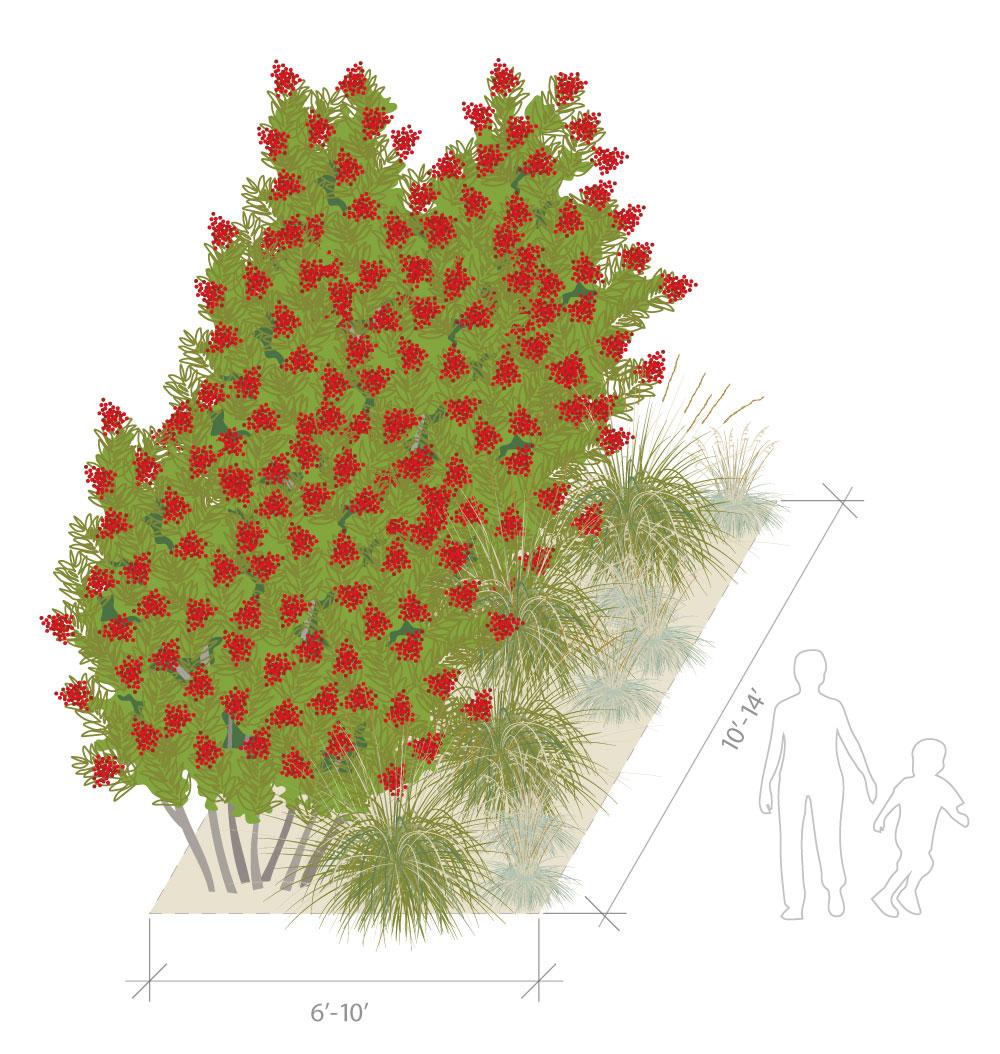
Native shrubs like the dense, evergreen toyon, can be a more beautiful and ecologically beneficial alternative to conventional fencing or non-native ornamentals.
What you'll need
- 3 Toyon
- 4 Deergrass
- 6-10 California fescue
13-17 TOTAL PLANTS
Linear strip and swale
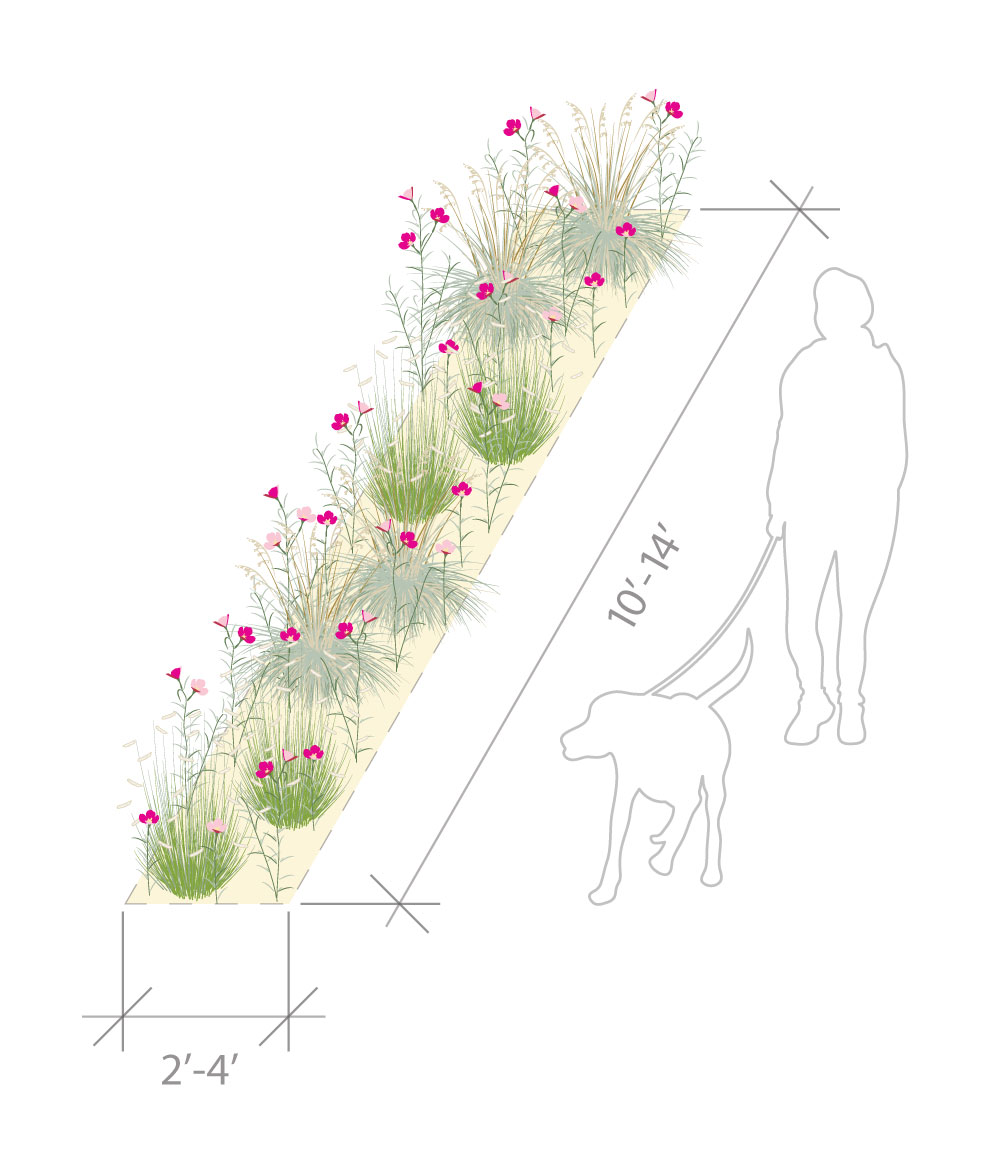
No space is too small or narrow to add at least a few native plants. For tough spots like curbsides and medians, try resilient grasses mixed with annually seeded flowers.
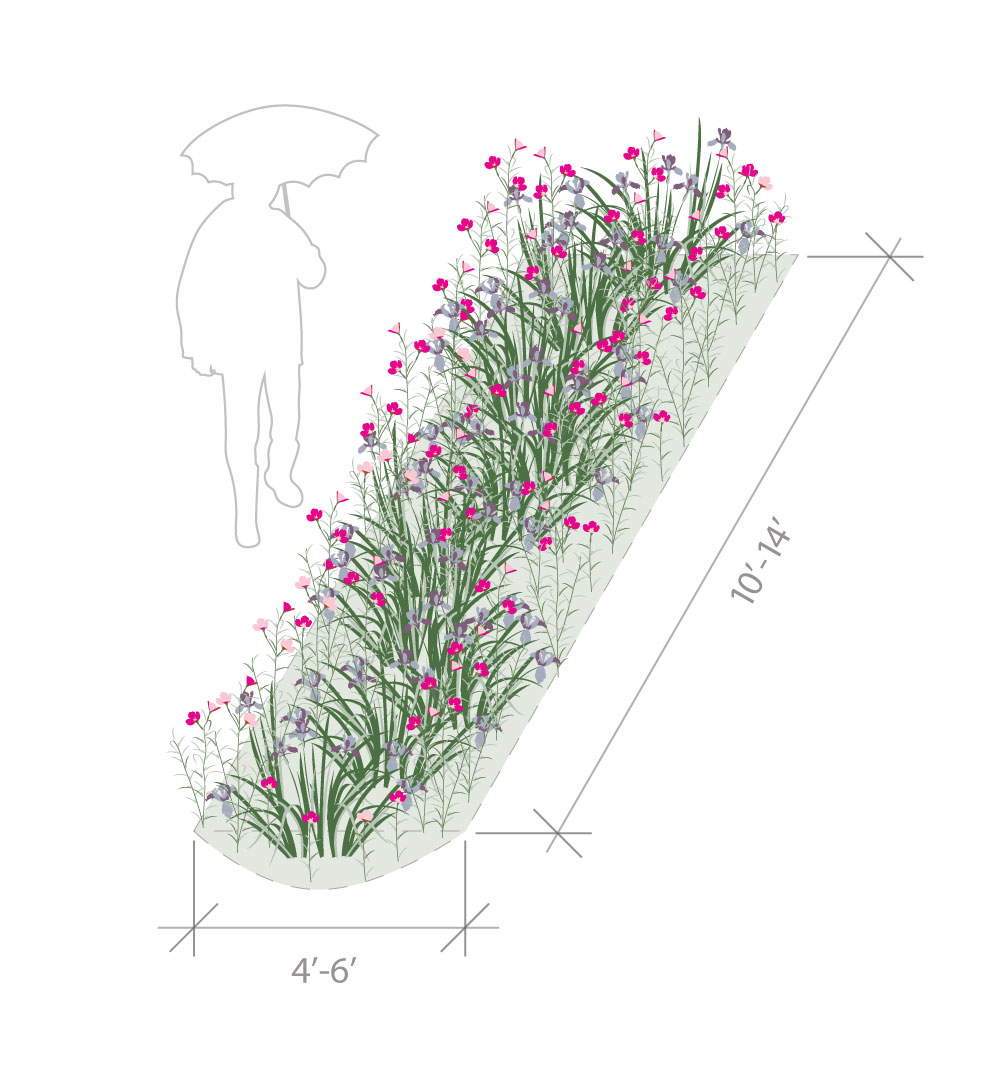
For drainage depressions or low spots in your garden, use species like Douglas Iris or Yarrow that don’t mind excess moisture from time to time.
What You’ll Need
Linear strip
- Purple clarkia (seed)
- 4-6 Blue grama
- 4-6 California fescue
8-12 TOTAL PLANTS
Swale
- Purple clarkia (seed)
- 8-12 Douglas iris
8-12 TOTAL PLANTS
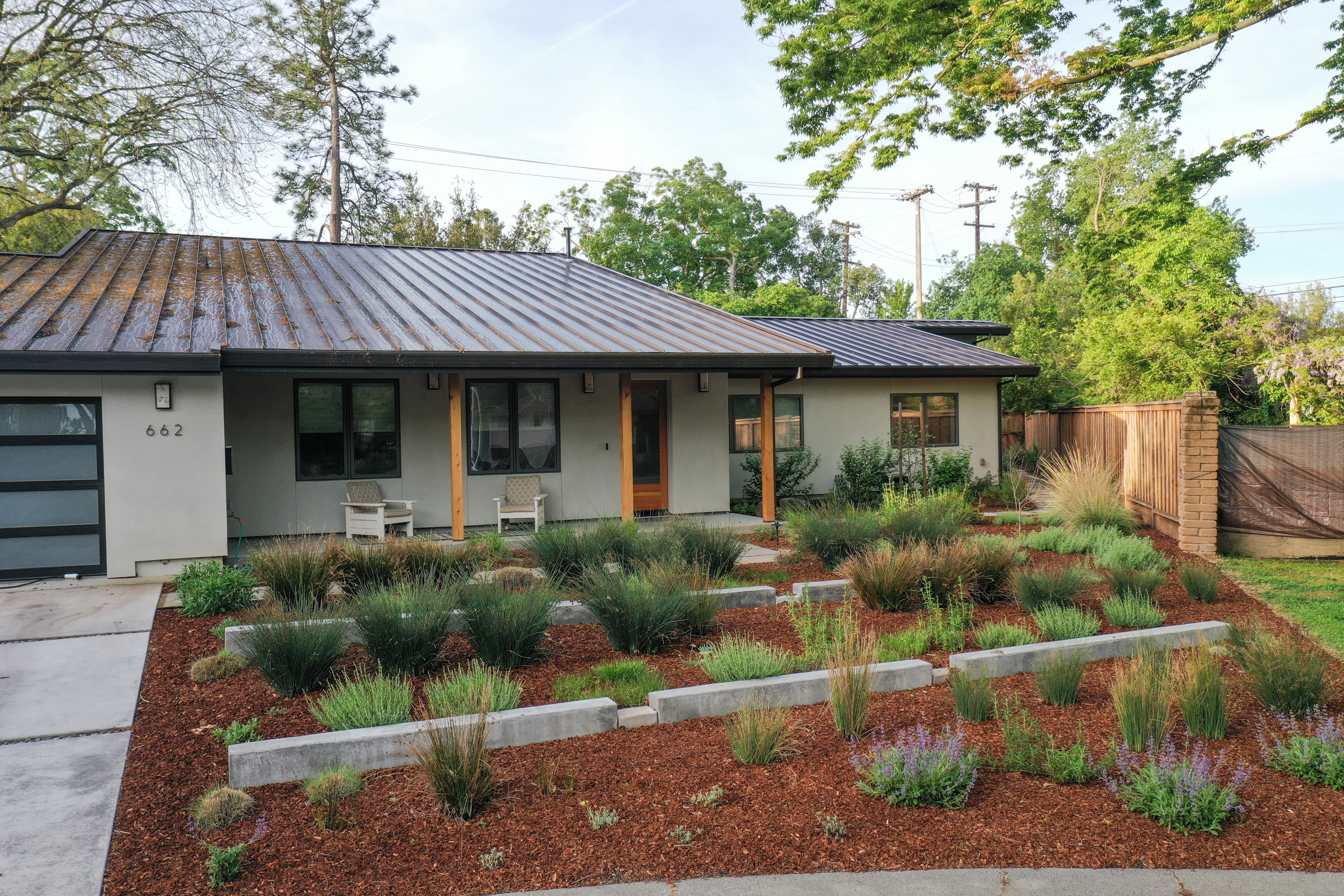
Welcoming entry
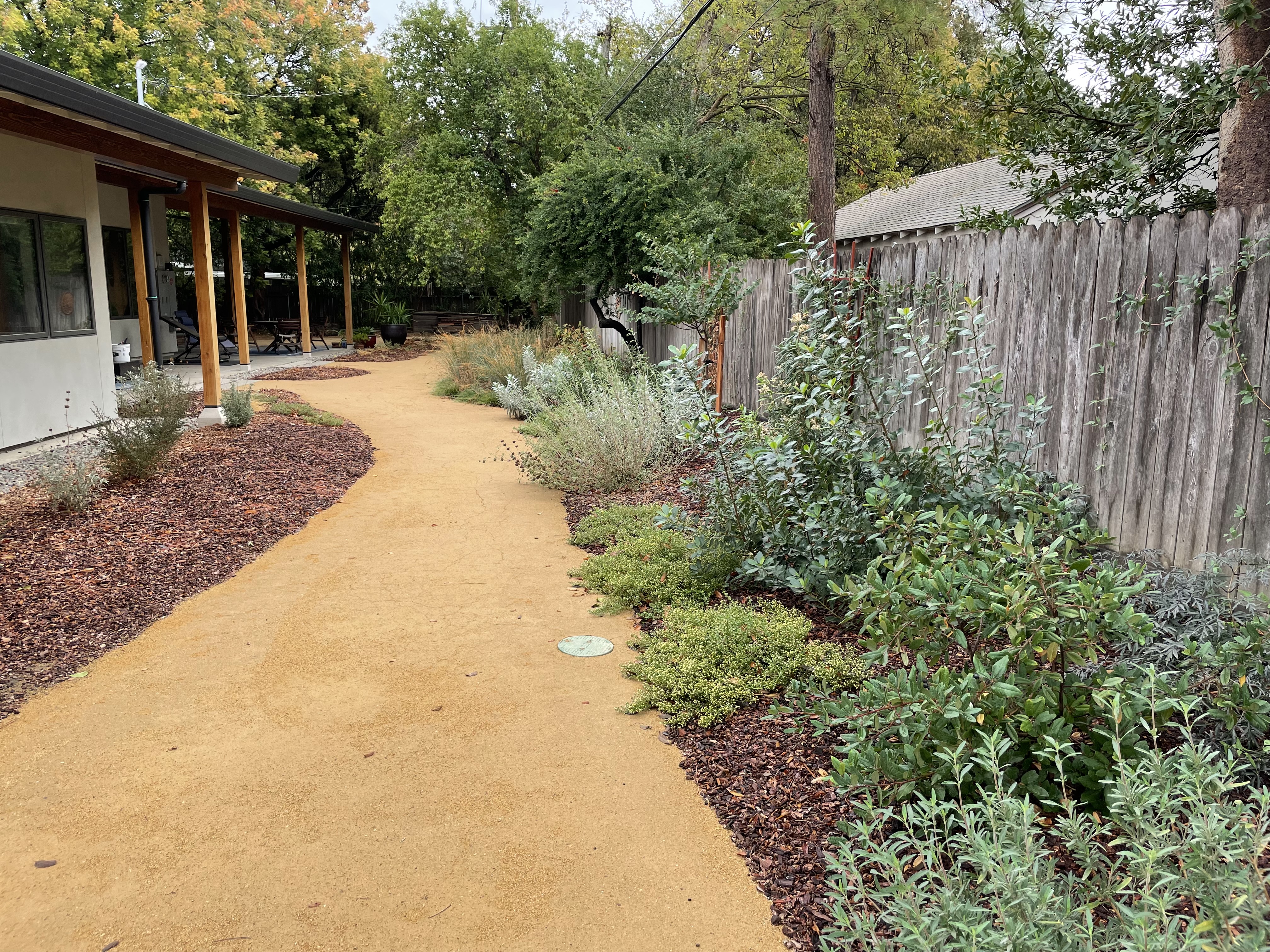
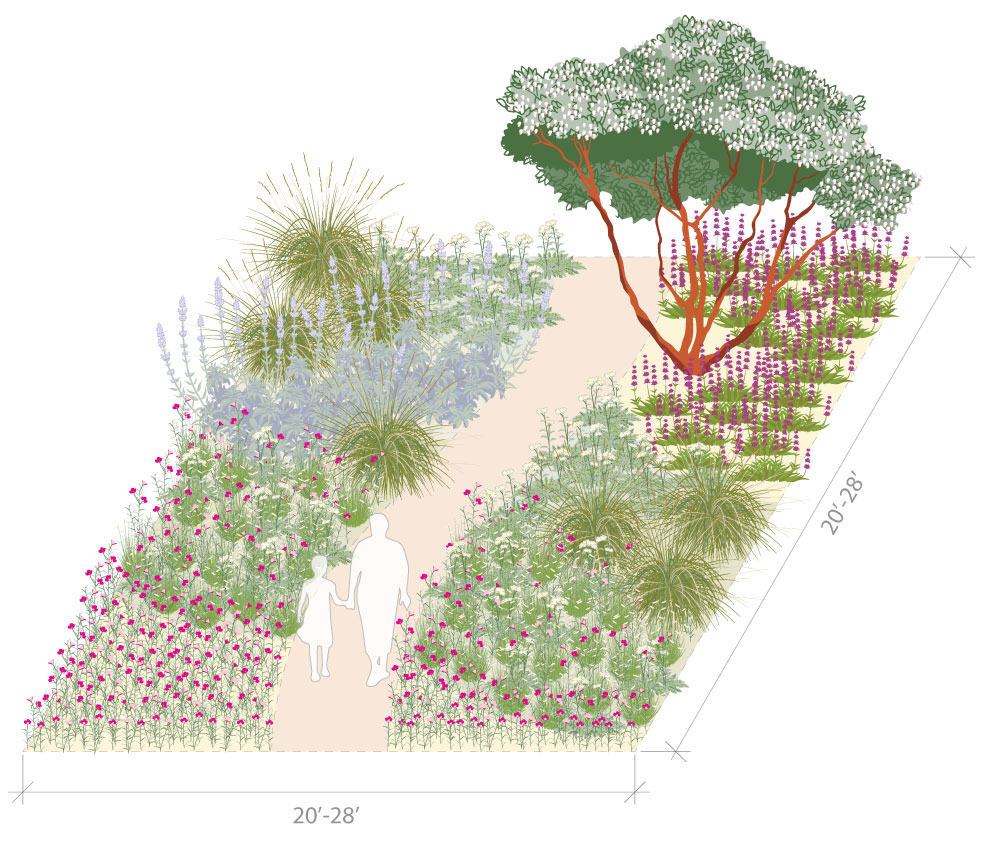
For a wilder and more natural look, work with curves instead of lines. Layer and weave drifts of species together.
Tips & Tricks
- Experiment with sowing different kinds of annuals every year.
- Let the plants spread where they want to spread.
- Don’t be afraid of change! Let the garden evolve organically.
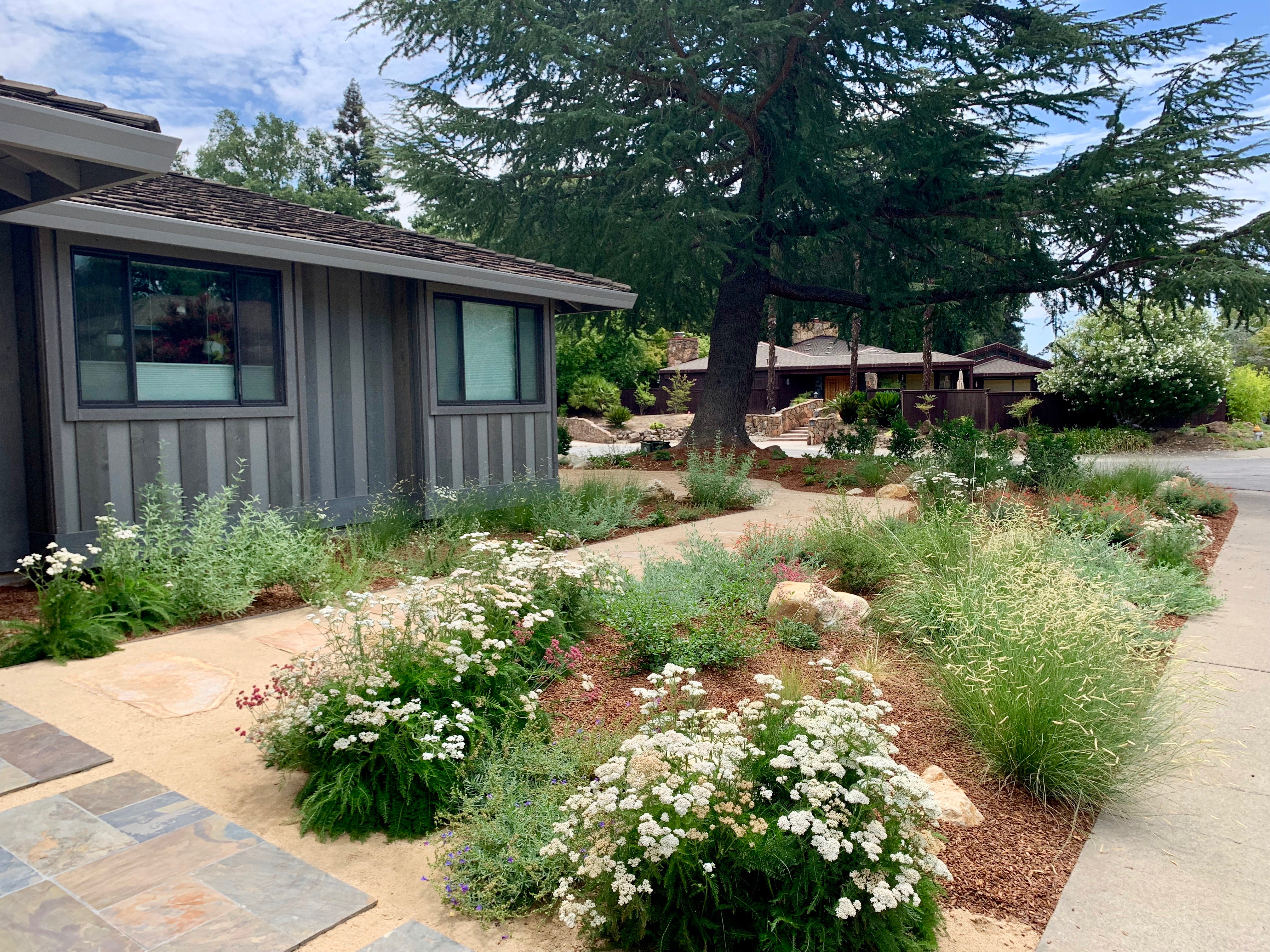
Contemporary entry
For a more contemporary look, stick with straight lines and interrupt single-species planting areas with a specimen manzanita or deer grass. For a more minimalist look, cut back on the total number of plants.
Tips & Tricks
- Design primarily with grasses, which have a more modern look and require less maintenance than plants with blooms.
- Use plants that spread through rhizomes, like yarrow, which will fill in gaps over time.
- Invest in one or two larger statement plants like manzanita to serve as a visual anchor.
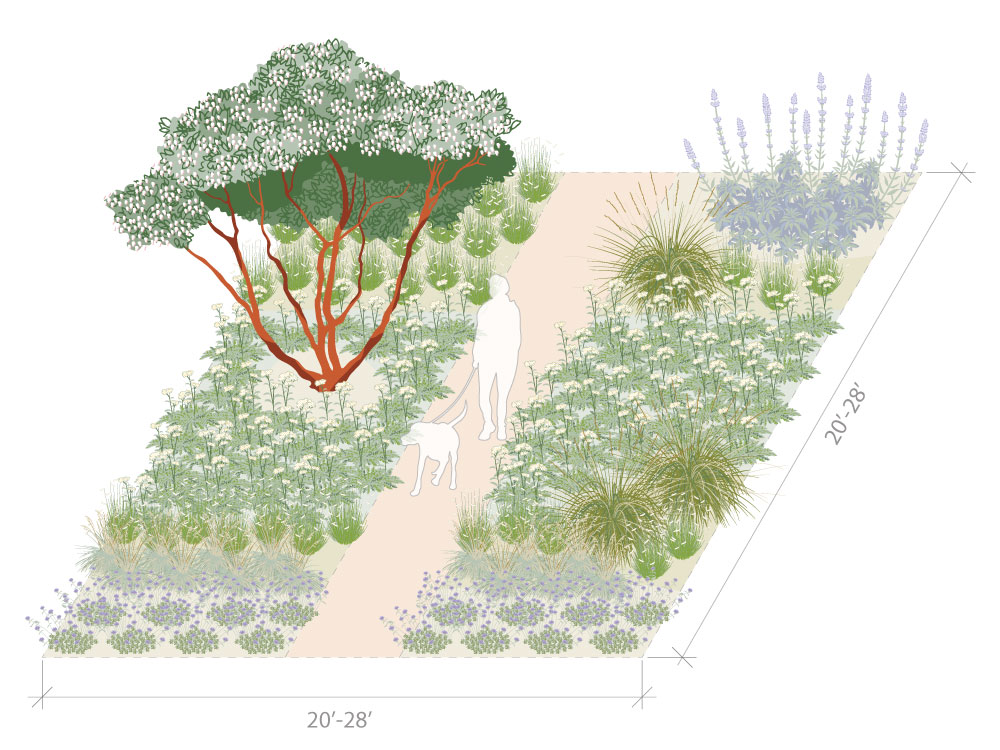
What You’ll Need
- Common manzanita
- 1 White sage
- 3 Deergrass
- 10-15 California fescue
- 10-20 Coyote mint
- 20-35 Blue grama
- 20-60 Common yarrow
75-125 TOTAL PLANTS
Love these designs?
CNPS worked with partners to develop Bloom! California to make it easier for more people to create beautiful, native gardens. Photo and designs credit go to Bloom! partner, Miridae Landscape Architecture and Construction, developed a suite of native plant landscape design templates that you can find on the Bloom! California’s website. These are essentially “recipes” you can follow for a variety of styles and needs.