

Carried by 0 nurseries
View Availability at NurseryData provided by the participants of the Consortium of California Herbaria
View additional distribution information on the Jepson eflora
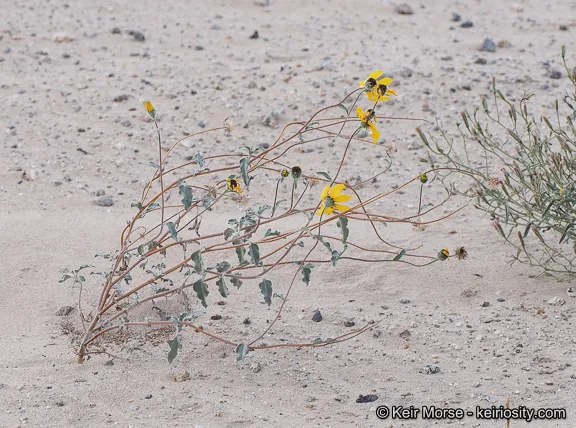
Helianthus petiolaris is a North American plant species in the sunflower family, commonly known as the prairie sunflower or lesser sunflower. Naturalist and botanist Thomas Nuttall was the first to described the prairie sunflower in 1821. The word petiolaris in Latin means, "having a petiole". The originated in western United States, but has since expanded east. The prairie sunflower is considered a be a weed. Helianthus petiolaris originated in the dry prairies of Minnesota, Oregon, Texas, the Dakotas, California, and other states in western and central United States. It has since expanded its distribution to throughout the eastern United States and into central and western Canada. Helianthus petiolaris is now the most widely distributed species of sunflower besides H. annuus. Habitat and ecology. The prairie sunflower is commonly found growing in sandy areas. They can also be found in heavy clay soil and in dry prairies. The prairie sunflower is unable to grow in shady areas; it needs to be in direct sunlight. It requires dry to moist soil. This species of sunflower is an annual flower, blooming between the months of June and September. The prairie sunflower can be found from the Great Plains, the Rockies, the desert regions of the Southwest, etc. Morphology. Individuals of this species occur as shrubs and also as taprooted annuals. They can grow up to four feet tall (120 cm). The leaves appear alternate and the flowers have a close resemblance to the traditional sunflower. The flowers are hermaphrodite, which means the flowers contain both male and female parts. The stem of the flower is erect and hairy. The leaves on the shrub are alternate, has a lanceolate shape, rough in texture, are bluish-green in color, and has a length between 2-5 inches. Flowers.
Annual herb, Perennial herb

Yellow
Creosote Bush Scrub, Weed (disturbed places)
-
Likely
-
Confirmed
Sleepy Orange
Abaeis nicippe
Orange-bellied Sweat Bee
Agapostemon melliventris
Texas Striped Sweat Bee
Agapostemon texanus
Anthidium paroselae